
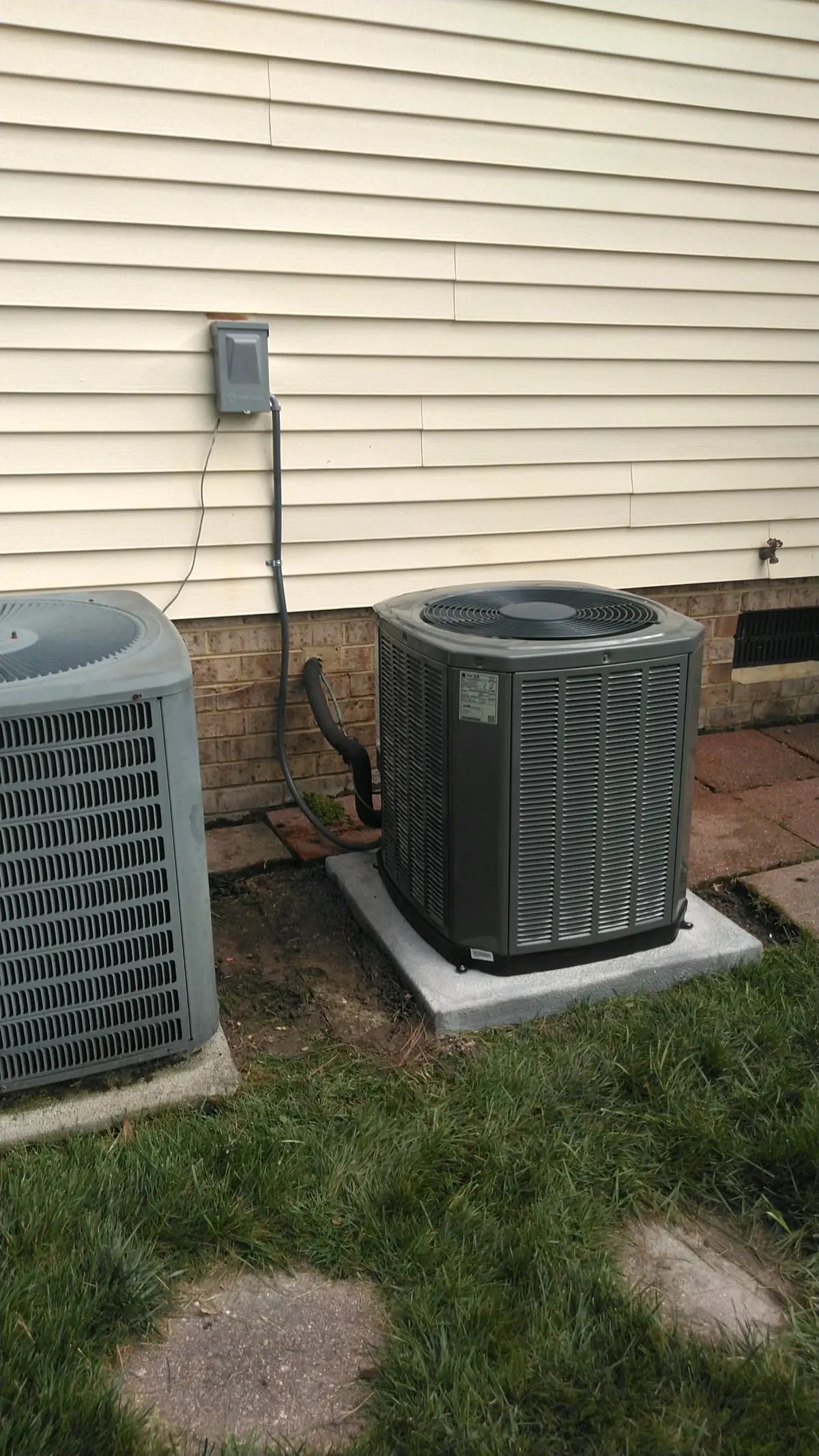
Heat pumps heat and cool most homes in Chesapeake, so when yours starts blowing lukewarm air, icing over, or leaning on emergency heat, you feel it in the house and on the power bill. Ace Mechanical repairs and replaces heat pumps across Chesapeake, from Great Bridge and Greenbrier to Western Branch, Grassfield and Hickory. We find the cause, give you one flat-rate price, and start only after you approve it.
Ace is family-owned and has served Hampton Roads since 1986. Owner Kevin Clarke runs the company, and we're a licensed and insured Virginia contractor (license #2705120886). We're open 7 days, 7 AM–8 PM.
Heat pump acting up? Call (757) 495-7782 for a flat-rate repair price or a free replacement estimate. You can also request service online.
Heat pump repair in Chesapeake
A heat pump works year-round, so it wears faster than an air conditioner that only runs in summer. Heating season is when the weak spots show up: a defrost board that sticks, a reversing valve that won't switch over, or backup heat strips that run all day.
Here's how a repair visit works:
- $75 diagnostic, waived with the repair. For home service calls, the diagnostic visit is $75. Approve the repair and the $75 is waived, so you only pay for the fix.
- One flat-rate price. After we diagnose, you get one price for the repair. It doesn't change if the job runs longer than expected.
- Nothing happens until you say yes. If you decline, you only pay the diagnostic fee. If we find a separate problem, we stop and quote it before doing anything.
We repair all major residential brands, and we repair first. If a fix will give you good years, we'll tell you that before we ever talk about a new system. For the full overview of what we fix, see heat pump repair and service.
Common heat pump problems
Blowing cold or lukewarm air
Short answer: Heat pump air feels cooler than furnace air, but if it's truly cold or the house won't warm up, something is wrong. The usual causes are low refrigerant from a leak, a stuck reversing valve, a defrost problem, or a thermostat that isn't set up right. A heat pump in defrost mode can also blow cool air for a few minutes, which is normal if it stops on its own.
Ice on the outdoor unit
Short answer: Light frost on cold, damp mornings is normal, and the unit should defrost itself every so often. A thick layer of ice that doesn't clear means a defrost or refrigerant problem. A loud whoosh during defrost can be normal; a bang or grinding is worth a call. We repair defrost boards, sensors and timers.
Aux or emergency heat running constantly
Short answer: If your thermostat shows AUX or EM HEAT most of the day, your system is leaning on backup electric heat strips, which use several times more electricity than the heat pump itself. Low refrigerant, a defrost problem, an aging compressor or a thermostat set up wrong are the common causes. Fixing it usually pays back on the next bill. We repair heat strips, sequencers and thermostat staging.
Won't switch between heating and cooling
Short answer: A heat pump that's stuck in one mode usually has a failed reversing valve or solenoid, or a thermostat problem. We test both before recommending a part.
Two systems, two sets of problems
Many newer Chesapeake homes in Grassfield, Hickory, Culpepper Landing and Edinburgh have separate upstairs and downstairs systems. The upstairs unit, usually in the attic, works hardest and fails first. We service both systems in one visit and tell you if one is aging faster than the other.
Heat pump replacement with free estimates
Repair or replace? If your heat pump is under about 10 years old and the repair is reasonable, repair usually makes sense. If it's older and needs a compressor or reversing valve, or has needed several repairs, replacement is usually the better value. Other signs it's time: rising winter power bills, a house that never quite gets comfortable, loud grinding or banging, or an older system that uses R-22 refrigerant, which is no longer produced and is expensive to recharge.
When replacement is the right call, here's how we do it:
- Inspection and honest advice. We check your current system and tell you plainly whether repair or replacement is the better value.
- Load-based sizing. We look at your home's size, insulation, windows and ductwork. An oversized unit short-cycles and leaves humidity behind.
- Written, flat-rate options. You get clear prices for each option, including high-efficiency and dual-fuel choices where they make sense. Estimates on new heating and cooling equipment are always free.
- Installation. Outdoor unit, indoor air handler or coil, line set, drain and float switch, thermostat set up correctly for auxiliary heat, and permits when required.
- Start-up and walkthrough. We test heating and cooling modes, defrost and airflow, and show you how to get the most from the new system.
Most replacements are done in one day. Jobs that include ductwork or electrical upgrades can take longer.
Already have a quote from someone else? We offer free second opinions. And if you have a written quote from a licensed Virginia contractor for the same scope of work and comparable equipment, show it to us. We'll match or beat it, or tell you honestly why the jobs aren't the same. See how our pricing works.
For more on system types, including dual fuel (a heat pump paired with a gas furnace, if you have gas service) and ductless mini-splits for additions and bonus rooms, see heat pump replacement.
Coastal air and your outdoor unit
Chesapeake is laced with rivers and sits close to the Bay and the ocean, and breezes carry salt well inland. Salt settles on outdoor coils and electrical connections. Over time it eats the thin aluminum fins and corrodes the joints, which leads to leaks and lost efficiency.
What helps:
- Rinse the coil gently with fresh water every few months. Never use a pressure washer on the fins.
- Keep two feet of clearance around the outdoor unit for airflow.
- Get a yearly professional coil cleaning and a check of the electrical connections.
- Ask about coastal coil coatings when you replace. Some manufacturers offer them on new equipment.
Read more: salt air and your heat pump.
Fall tune-up
Heat pumps run year-round, so they need two checkups a year: once in spring and once in fall. Our fall heating check includes a check of the heat strips and defrost, refrigerant temperatures and pressures, capacitors, contactor and electrical connections, the condensate drain and float switch, airflow and temperature split, and the filter. You get a short written summary of what's fine, what's wearing, and anything that needs attention now. No surprise upsells.
Ask about putting both seasonal visits on a schedule when you call. See maintenance and tune-ups.
Serving all of Chesapeake
We cover Greenbrier, Great Bridge, Western Branch, Deep Creek, Grassfield, Hickory, Edinburgh, Butts Station, Indian River, South Norfolk, Etheridge Lakes and Culpepper Landing. For everything else we do in the city, from water heaters to restaurant refrigeration, see our Chesapeake service area page.
Frequently asked questions
Why is my heat pump blowing cold air?
Usually low refrigerant, a stuck reversing valve, a defrost problem or a thermostat that isn't set up right. A few minutes of cool air during defrost is normal; cold air that doesn't stop is not.
Is it normal for a heat pump to ice up in winter?
Light frost on cold, damp days is normal, and the unit should clear it on its own during defrost. Thick ice that doesn't clear means a defrost or refrigerant problem that needs a repair.
How long do heat pumps last near the coast?
Typically 10 to 15 years. Salt air and year-round use can shorten that, and maintenance twice a year helps a system reach the long end of the range.
Should I repair or replace my heat pump?
If it's under about 10 years old and the repair is reasonable, repair usually makes sense. If it's older and needs a compressor or reversing valve, or has needed several repairs, replacement is usually the better value. We'll tell you honestly which one we'd pick.
Do you offer free estimates on new heat pumps?
Yes. Estimates on new heating and cooling equipment are always free, and so are second opinions on quotes from other companies.
Does salt air damage heat pumps?
Yes. Salt eats the thin aluminum fins on the outdoor coil and corrodes electrical connections, which leads to leaks and lost efficiency. A gentle freshwater rinse every few months and a yearly professional coil cleaning slow it down.
Heat pump down in Chesapeake? Call Ace
Call (757) 495-7782 and describe the problem. You'll get a flat-rate repair price, or a free estimate on a new system, before any work starts. Open 7 days, 7 AM–8 PM. Prefer a callback? Request service online.